3/1 Runoff

P1120813

This post is more of a rant, born of frustration over a situation (all too common) that affects this little forest fragment. When it comes to storm water, out of sight means out of mind. The useless old culvert pipe in the pic above once drained the area of Creason Park’s maintenance barn. The pipe was long ago undercut by the torrent of storm water that gushes from the culvert above it. Among the misfortunes of this forest – being situated on one side below a large area of pavement and parking lots that pour stormwater down its steep slopes with every heavy rain. Read More

2/22 February Forest

P1120726
an earthworm ventures out in the wet warmth

Got a taste of the new February this past Sunday. 52 degrees and waves of Sandhill Cranes surging north, the forest filled with their ancient shrill croaking. Once you’ve learned this call you won’t forget it; you’ll always look up when they’re passing overheard. As the flocks moved over the forest they were flying low and circling, seeking a better stream of wind to ride on. I could barely focus on anything else; the sound of cranes is one of my gateways to an altered state of mind. Read More

2/14 Survivors

P1120640 (2)
The oldest Black walnut I’ve found in this forest

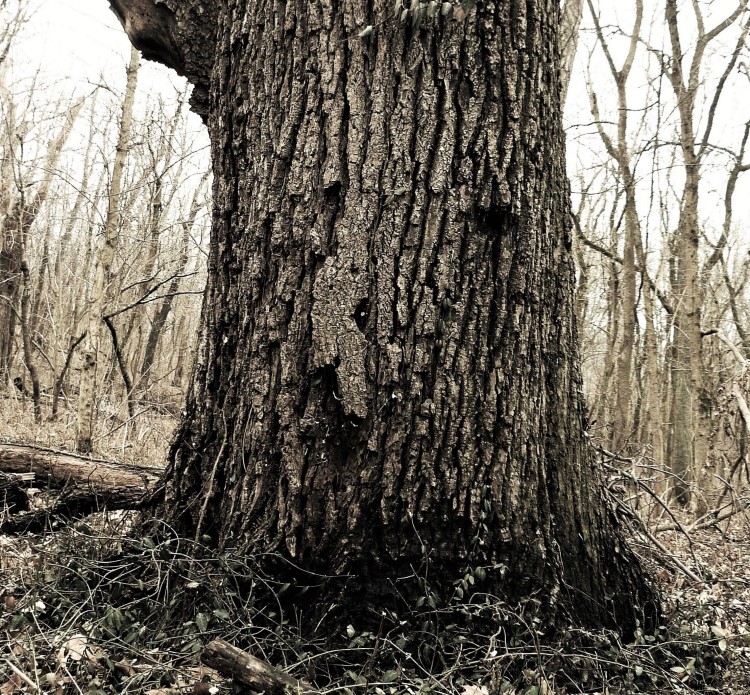
Trees, like people, need to dodge a lot of bullets to get really old. The shade of other trees, browsing animals, insects, disease, wind storms, buck rubs, people with chain saws, and just plain bad luck. So many ways to lose out, it’s amazing that any tree makes it past 100 years. Even more so in this little fragment of forest, that has endured a succession of anthropogenic impacts over the last 200 years. There are just a few older trees left here; these survivors have been witness to the gradual fading of a remarkable landscape. Read More

2/1 A Year of Turtles


P1030808_LI
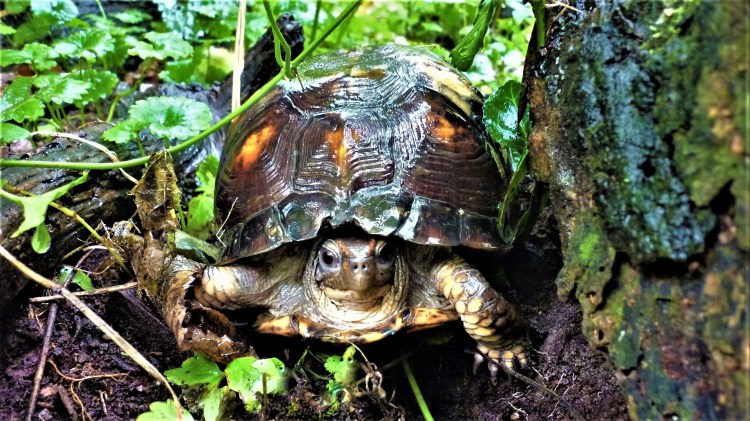
female boxie hiding behind a stump, 9/13/17

One of the more unique aspects of Beargrass Creek SNP is the healthy Eastern Box Turtle Terrepene carolina population. Why have they have continued to thrive in this small fragment of forest? In part they’re protected by a quirk of geography – a human-made barrier. Though the preserve is completely surrounded by neighborhoods, it’s “walled” on two sides by the channelized South Fork. This deep ditch serves as a kind of moat,  preventing box turtle movement in the direction of nearby busy roads, while allowing for movement along the stream corridor. Habitat is good in the forest, with varied terrain, moist soils, springs, berry-producing plants and plenty of snails and earthworms. Despite being in the city, it’s box turtle heaven. Read More

1/22 Bedtime for Meleagris

P1120648 (2)

As I was leaving the forest this evening, about the time when it’s almost dark, a loud clumsy flapping in a nearby Black walnut tree startled me. It appeared to be a large bird, trying to steady itself on a small limb. Hawk? Owl? In my experience these masters of stealth would never draw so much attention to themselves. As it settled and stretched out its skinny neck, the bird’s identity was apparent. Have you guessed it? Yes, turkeys roost in trees at night. Read More

1/19 Winter Deer


P1120393 (10)
doe resting in the winter sun

As a child, the idea of actually seeing a wild deer was exciting, but improbable. I was a city kid, and though we often joined a local club for hikes in southern Indiana, I don’t remember even seeing tracks very often. And I certainly never imagined that one day there would be herds of deer in the city that I could watch every day. In less than 40 years, Whitetails have morphed into a fast multiplying garden nuisance and road hazard. And as usual there isn’t one single reason, but a convergence of ecological and cultural changes. Read More

Day 1


P1120504

It’s the unofficial one year anniversary of the blog; if I ever worried that I’d run out of things to write about, I’m not worried anymore. This tiny wild place in the city is infinitely richer than anyone could guess. Everyday-ness, familiarity helps – noticing the minute progressions of life in it’s seasonal cycle. Day 1 is just what I noticed today. Read More

12/14 Crystallofolia


P1120400
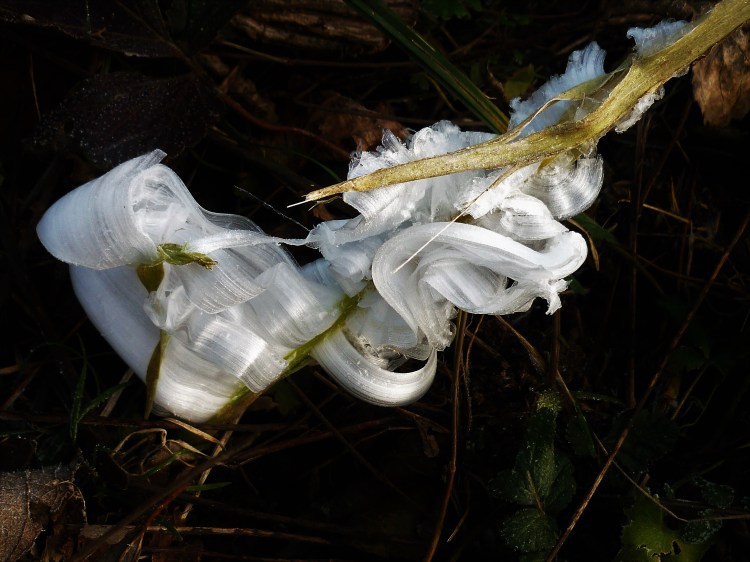
Finally, a color pic – crystallofolia emerging from a stem of White Crownbeard, Verbesina virginica

Scientists have been trying to explain the unique phenomenon of  “ice ribbons” for hundreds of years. But oddly, there was no consensus on what to call them. 19th century German botanists came up with “Eisblatt” (iceleaf); translated into latin it becomes “Crystallofolia”, which rolls off the tongue much more nicely. No surprise, the term was coined by linguist Dr. Bob Harms. In fact, we have Dr. Harms and Dr. James Carter (ISU professor emeritus, Geology/Geography dept.) to thank for finally demystifying the phenomenon with their careful research. Read More