What happened here? Feb.20

One of the great things about spending time in the natural world is getting to experience its ever-changingness. New surprises pop up daily, even in our small fragment of a forest.

Here’s a chance to test your nature interpretation skills, with some photos from the past few months. Guess what the picture is about, and check your answers below.
 

102_5805

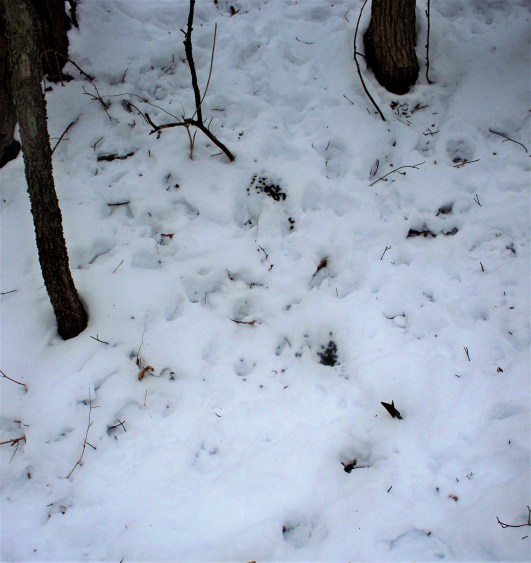
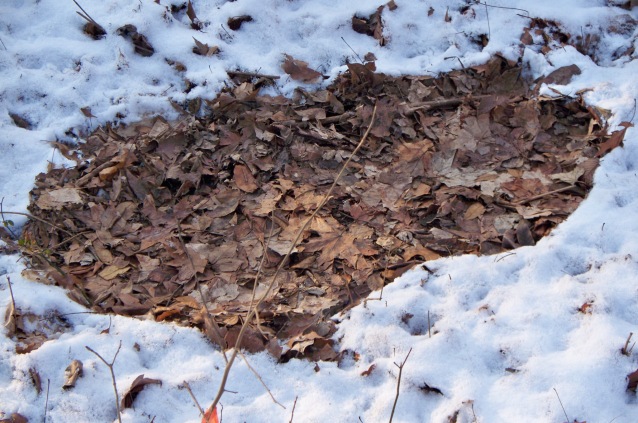
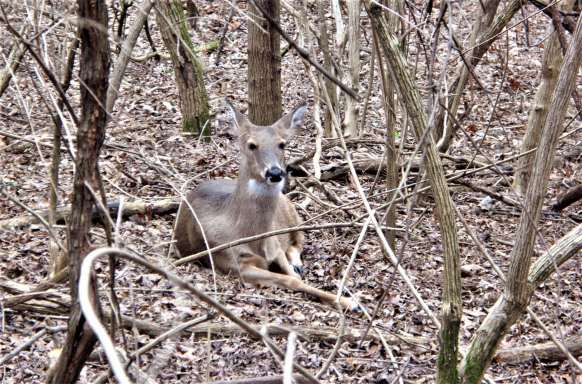
 1. Hint – the snow free area is about 3.5 feet at the widest.
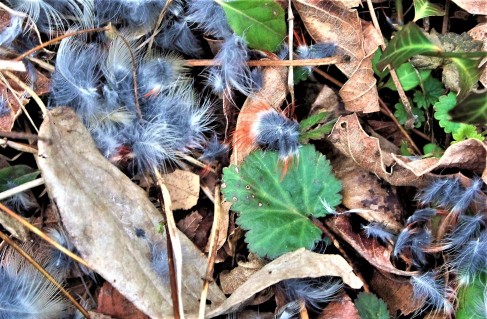


102_5814102_5813

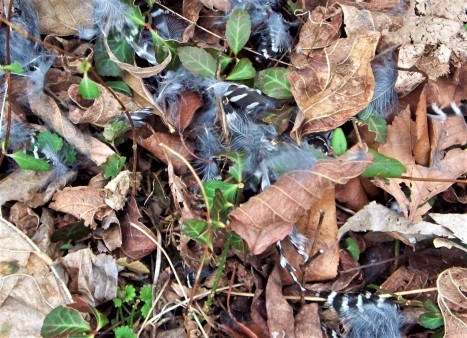
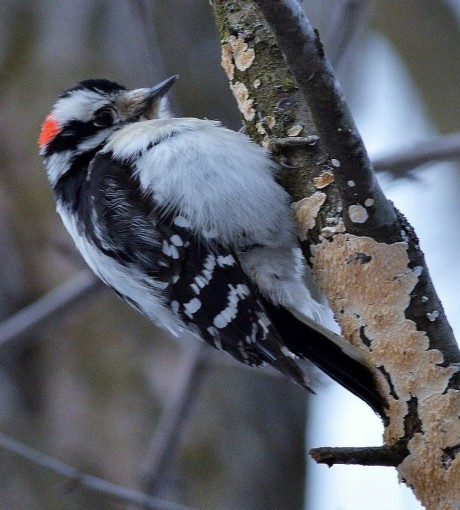
2. The two pics above are feathers from the same unfortunate bird – what is it?
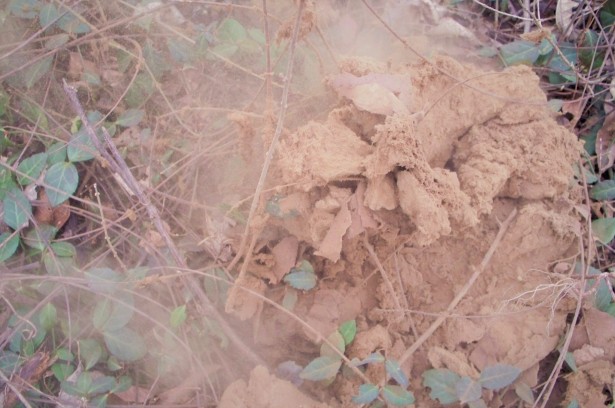


102_5881

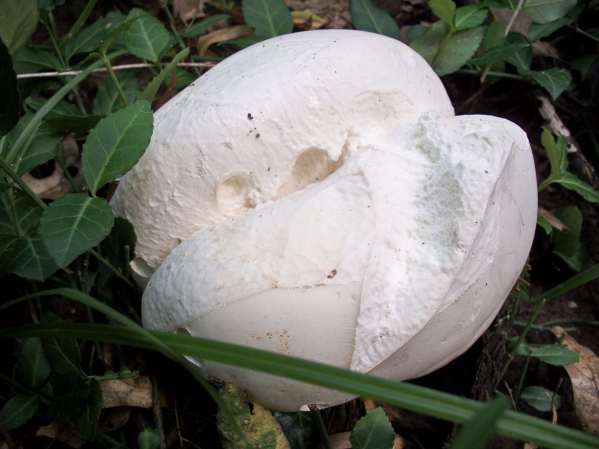
3. I kicked this organism to produce the dusty looking brown cloud
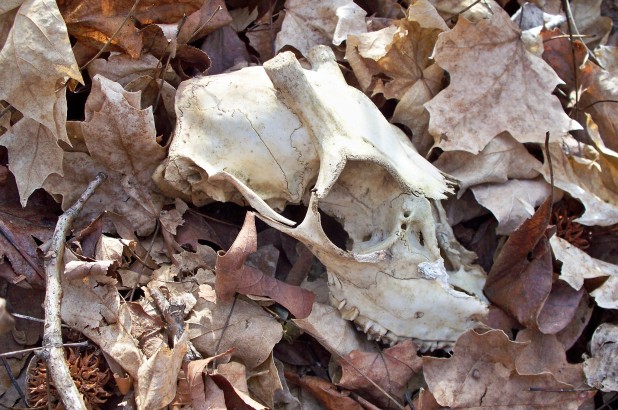


102_5940

4. Yes it’s a deer skull, but there’s something different about it.
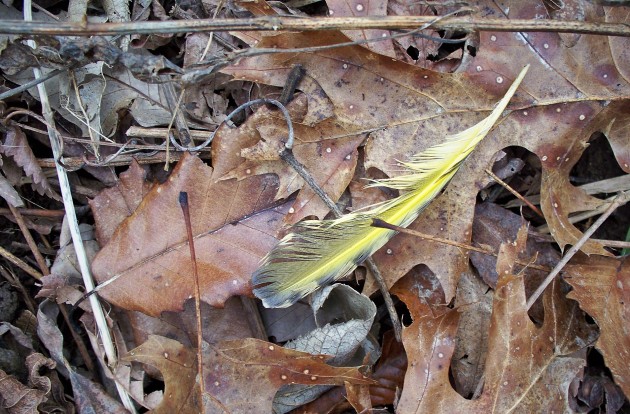


102_5909

5.  Another unfortunate bird – the yellow color is a hint


eab_tracesresized1

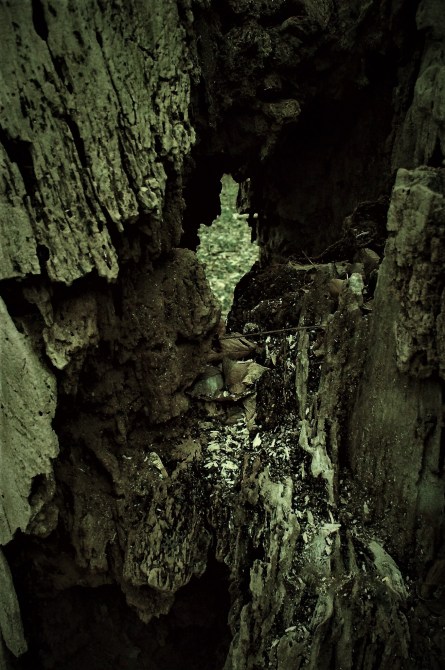
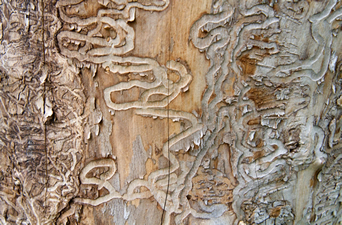
6. Hint – this strange pattern was hidden by the bark of a tree.


Answers:
 

102_6066

1. It’s a deer bed. Deer spend plenty of time lying around – it helps them conserve energy when it’s cold and stay comfortable when it’s hot.


downy_woodpecker_84810310381

2. Note red feathers on the back of the head, and  bl. and wh. barred wing feathers of a male Downy Woodpecker. Why would anything bother with such a tiny bird and how would they catch it, since the Downy is not a perching bird? Likely suspects – Cooper’s Hawk or Screech Owl.


100_4381

3.  Lovely in its youth, this giant puffball, Calvatia gigantea,  must fulfill its purpose in life by turning into a spongy brown mass of spores.


4.  The flat-top knobs on the deer skull are “pedicles”, not antlers. This little guy died in his first year. We know this because pedicles must develop first, before antlers can grow from them. These are the pedicles of a young buck.


northern_flicker_yellow-shafted_207665644482

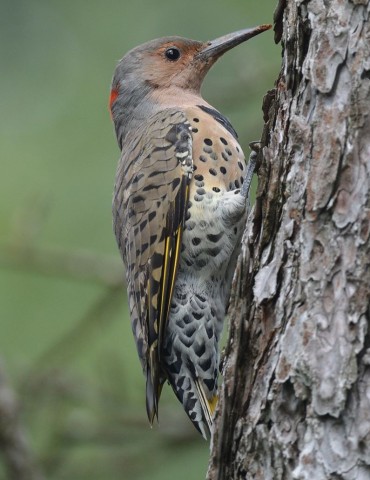
5.  A Yellow-shafted Flicker also was eaten. See the little streak of yellow feather shaft peeking out from the wing. I have observed a number of piles of these lovely yellow feathers over the years. Not sure if Flickers get eaten more, or if I just notice their feathers more.


agrilus_planipennis_larva1

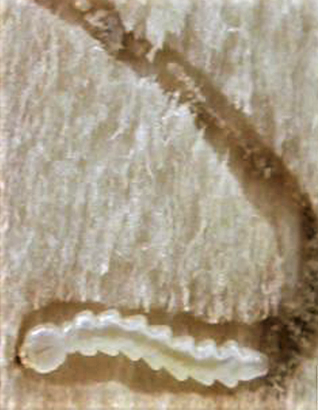
6.  The hieroglyphic looking marks are the larval feeding paths of the Emerald Ash Borer beetle. It kills an ash tree by feeding on the living part of the inner bark that moves sugar and nutrients. Over time this layer is so disrupted that it can no longer function.
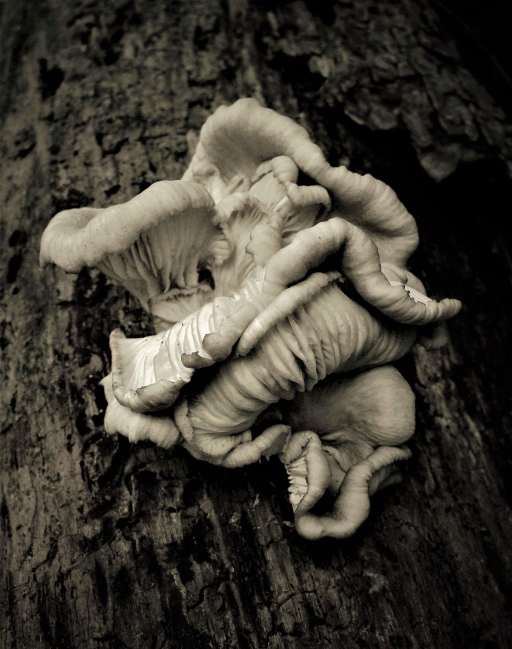
 

So how many did you know? Four or more and you earn the title of “naturalist”. Less than three – it’s time to get out in the woods more!

Monotone forest feb.16


Having just finished a post about wildly colorful fungi,  it’s time to go to the opposite extreme. Be forewarned – this post is as much about art as it is about nature.

 I have a confession to make – I’m getting bored and irritated by pictures of nature. Often they have a color-saturated fantasy look about them, as if the reality isn’t good enough. I have been guilty myself on these pages, of amping the colors in a photo to make it more eye-grabbing. But I’m also a big fan of going backward to the black and white image.

(Viewing this through your email? Consider going to the blog itself for a better image appearance.)


100_4297-2
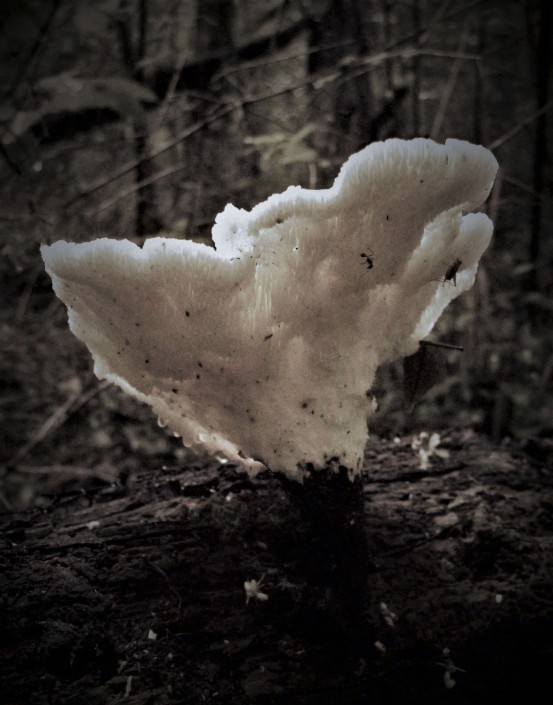
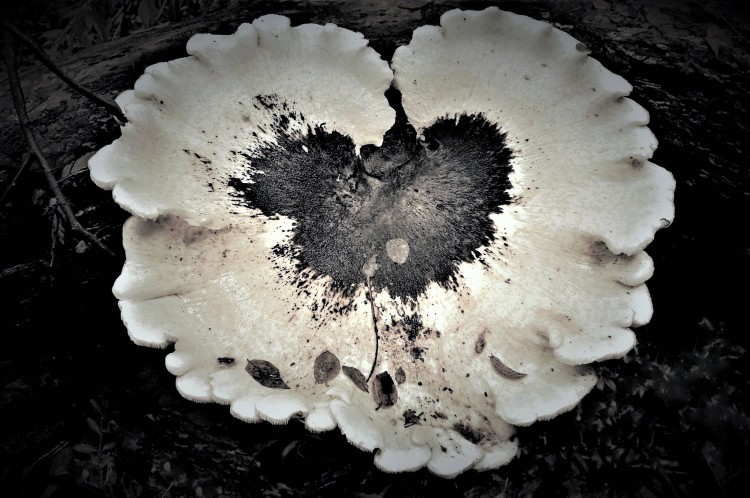
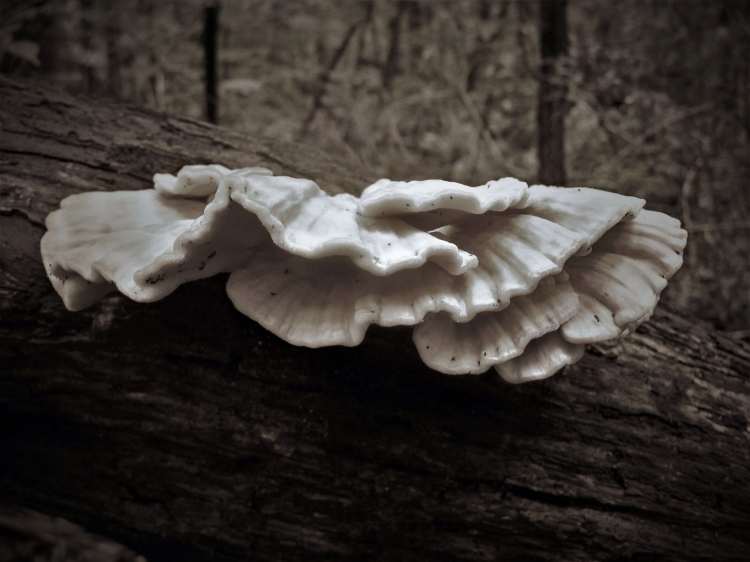
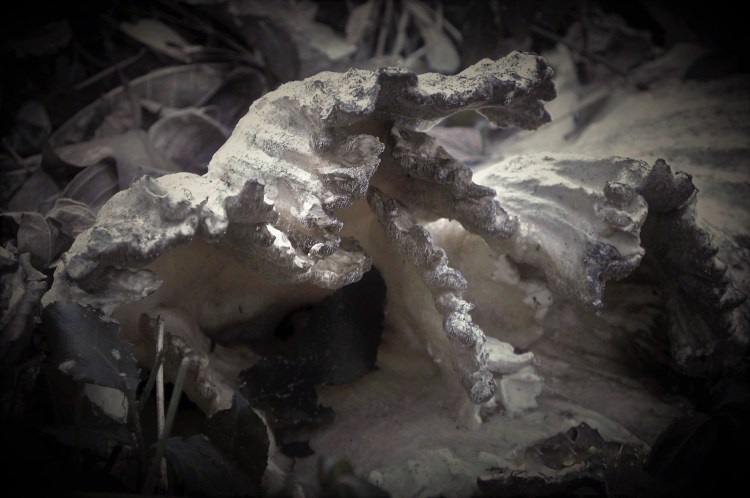
Aging oyster mushroom, Pleurotus ostreatus      The convolutions remind me of Edward Weston’s peppers


If you’re following this blog you know I used to take black and white photos and print them in my darkroom. Yes, the old-fashioned way with smelly chemicals. So much easier to just turn on the “edit” feature, and make an ordinary color pic into something else. These are not actually “black and white” – rather they are toned, so  there is still a hint of color to indicate the warmth or coolness of the light.

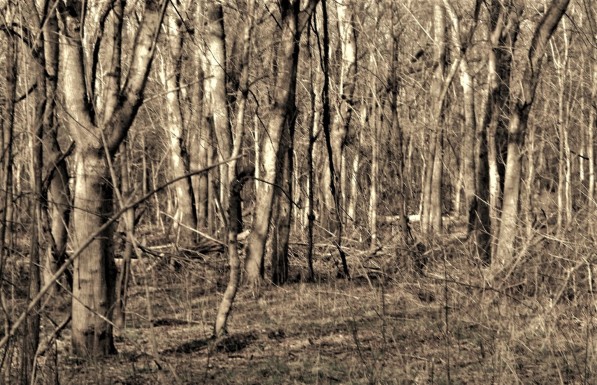
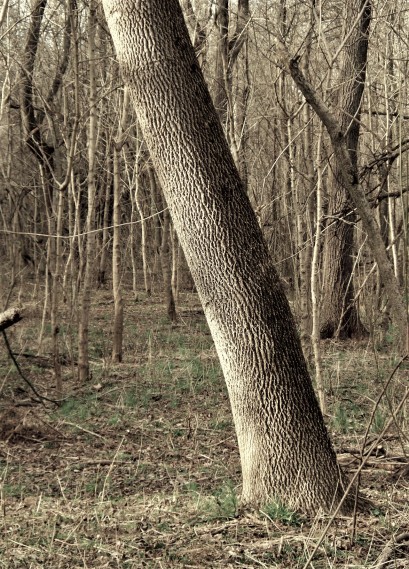
Every forest is different of course. Having spent so much time in this one I’m getting to know its unique character. Somehow monotone images capture this better than color, maybe by eliminating some of the element of distraction.  Trees and fungi, with the way they grab the light, are well suited to this approach.


100_4379-2
translucent light shows this species has pores, not gills


The visible presence of fungi is an important part of the character of this forest. Wave after wave of windstorm, disease, and infestation have laid many an old tree on the ground. And then the fungi come to feed, spreading their hyphae deep into the fallen trunks. What we see above ground is just the “tip of the mushroom” – the fruiting bodies that produce spores.


102_5642
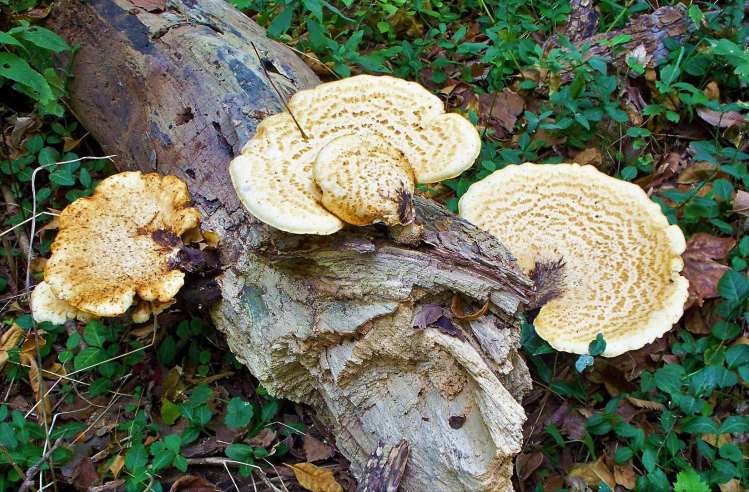
slug feeding  on an old dryad’s saddle,  Cerioporus squamosus


In a monotone image, fungi are distanced from our ordinary perception and revealed as truly astounding ghostly eruptions.


100_4313-2
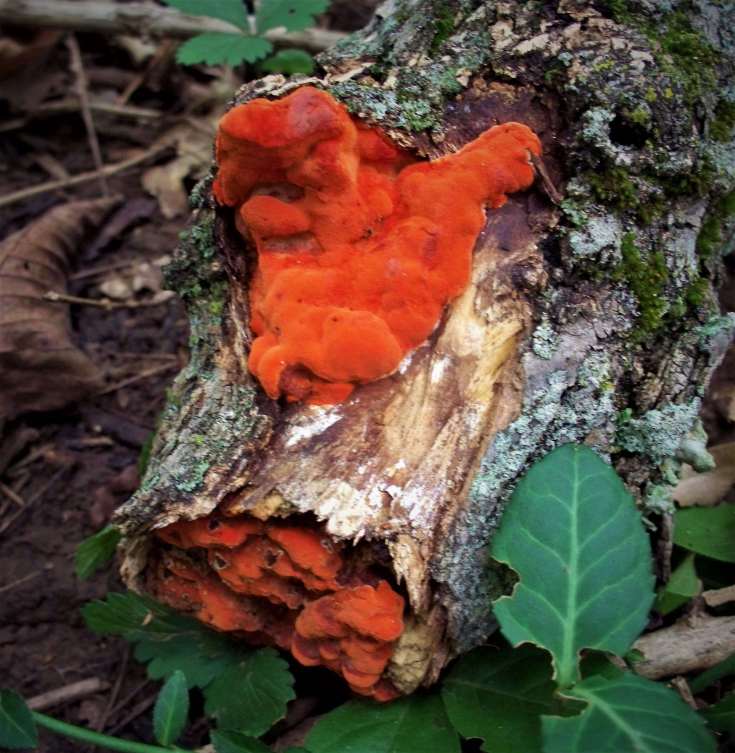
ordinarily orange Laetiporus


One of the joys of winter woods – afternoon filtered light on tree trunks. This pic is sepia toned and softened to give the feel of an old photo. It would be amazing to have an actual old photo or two of this place from back in the day. Just 100 years ago there was likely very little forest here, just scattered trees, grazing livestock, even fields of corn.


102_6099

Imagine scrolling through the centuries in our time machine, in this one place, as forests rise and fall and rise again.


Speaking of rise and fall, the pic below introduces the next post, still being written. Can you guess what it will be about?

102_6103


Unexpected Colors feb.13

100_4387
this velvety red fungus has yet to be ID’ed

Though winter woods are beautiful and so revealing, by this time of year I am longing for more color. Not just the green of madly photosynthesizing leaves, but the rarer hues.

In our forest the brightest pigments pop up unexpectedly – in the fruiting bodies of fungi. I never hunt for fungi, but find them in the course of doing something else. Another one of the perks of being off-trail a lot cutting or pulling invasive plants.

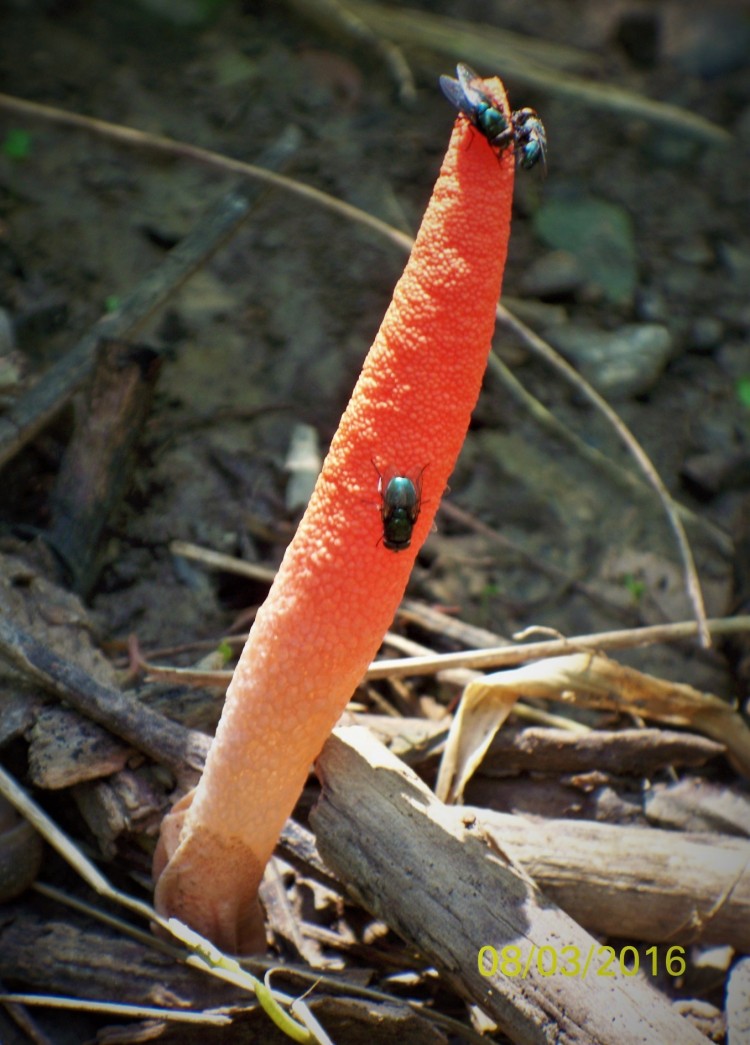
But what is the purpose of fungal pigments? Very few fungi need to attract the services of insects, since they don’t engage in cross pollination. One group that does advertise are the stinkhorns. With the color of flesh and smell of rotting meat, plus a coating of nasty brown slime called the “gleba”, there is no doubt who the customers are. Flies walk on and eat the spore containing slime, then act as dispersers.

102_5429
though young and fresh, this Mutinus caninus is already attracting flies


It’s harder to understand why the color pink would be needed by the  life form pictured below, part of a kingdom so ancient that it predates insects.

100_4553
not the best image of Lycogala epidendron

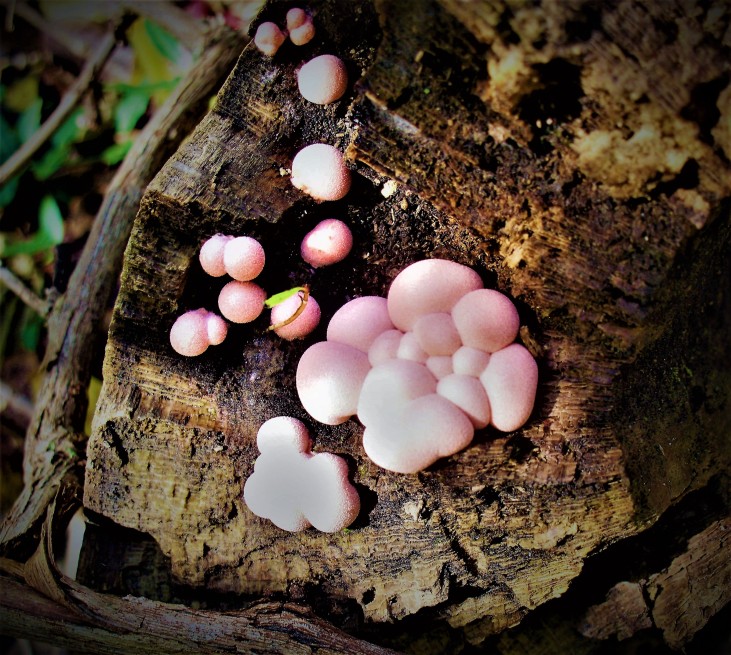
If you did a search by typing in “fungus that looks like bubble gum” you’d get a lot of pictures of this. Except that it isn’t a fungus at all, it’s the bubble gum slime mold in its spore-producing stage. This one is a cosmopolitan species, meaning you can spot it in South Africa, Scotland and Alaska. I was lucky enough to spot it on a rotten log in our forest.

Not even close to fungi, slime molds have their own kingdom, the Protoctista. A slime mold you may have seen is the equally descriptively named “dog vomit slime mold”, its neon yellow plasmodium often creeping over front yard mulch in search of food. The sporangia stage that it changes into overnight is not nearly so attractive, hence the name.


102_5438
Leucocoprinus birnbuamii

According to my internet search, this vivid mushroom is most likely to pop up in a flowerpot or a green house, though I photographed it in our forest. The “yellow houseplant mushroom” as it’s called in North America, could be considered an invasive species since it has traveled out of the tropics with the help of humans.


102_5636
cut honeysuckle limb turned over to expose Terana caerulea,

Back to the question of colors – how does science explain the shockingly bright hue of the cobalt crust fungus? (It really defines the color “cobalt blue”- the first time I saw one, was sure that someone had been busy with a can of spray paint!)

The cobalt crust, also described as “blue velvet on a stick” is relatively common in our forest. It shelters on the underside of dead limbs, enjoying the wealth of new habitat found on cut bush honeysuckle. And the blue pigment is much more than color – it’s a biochemical weapon and defense system, particularly against bacteria. Since this fungus occurs in Europe too, it has been well studied, and the antibiotic cortalcerone is made from it. In fact, bacteria also use pigments in this fashion and can be disabled in the lab by having their colors removed.

These pigments are found throughout living systems, another example of our close relatedness with all life.  Melanin, which shelters us from ultraviolet radiation, is found in fungi too – researchers refer to it as “fungal armor”

So when you next see a shockingly colorful mushroom – ruminate on the wealth and potency of the biochemical compounds we call pigments. And isn’t it humbling to realize how much we share with fungus?


102_5678
Dryad’s saddle      Cerioporus squamosus


Smilax Revival Feb.8

Sometimes the one that gives shelter needs sheltering

102_6047-3

Smilax, we almost let you down. In our zeal to cut down all those big bush honeysuckles, we didn’t notice you were protected by some of them. Your vines happily streaming up to the sky from the center of an impossible tangle, ringed round by impenetrable bush honeysuckle and privet.

With the thickets of invasives gone, you were open to attack from big-eyed herbivores. Young tender shoots disappeared one by one, and the glorious spiny tangles began to shrink.

102_6067
last season’s new shoots were browsed

That’s unfortunate, since smilax patches give shelter to small creatures, young trees, and ground nesting birds. And shelter is scarce where we have removed invasive plants, since almost nothing else was growing there. It’s an awkward time, still a long way from the dense understory of native shrubs like spicebush that can be found in more intact forests.

But shelter can be created too..

102_6042

Note the green ropes of a Smilax hispida clonal patch, with brush and limbs strategically placed to prevent entry by deer. This technique is part of the “revival” – to actively encourage the return and survival of native plants in our forest.

102_6071

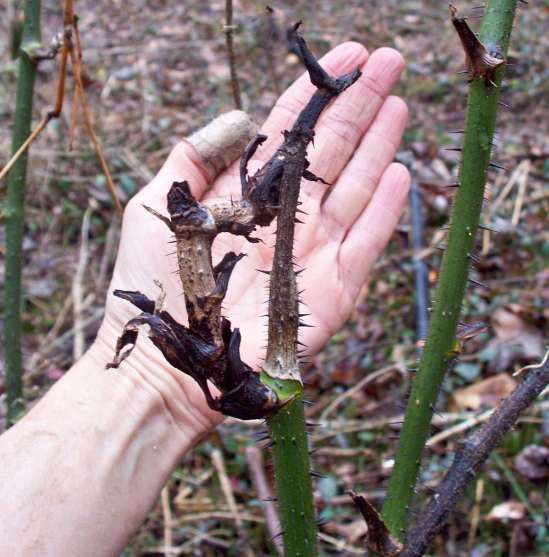
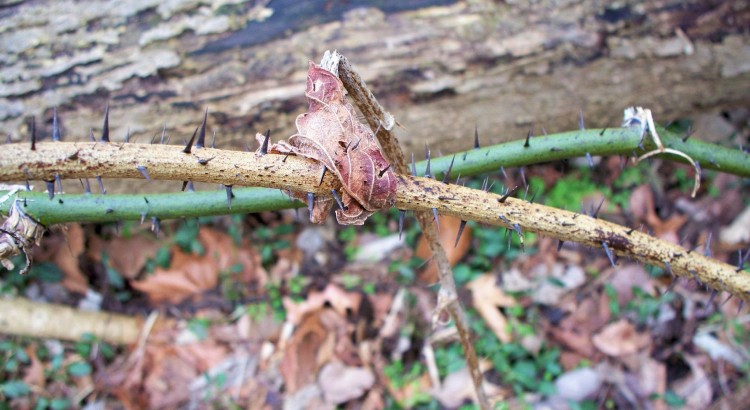
 You’d think these thorns would be enough to discourage anything.

102_6072

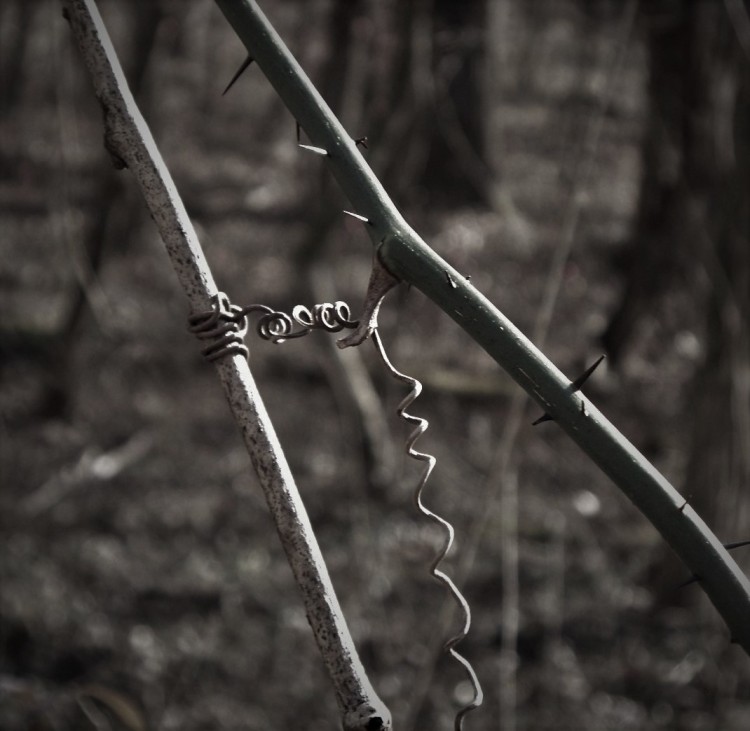
If you have been reading this blog you know I am fascinated by vines. All kinds of vines, even the invasive ones like porcelainberry and wintercreeper. They’ve hit on a great way to get off the ground in a hurry – dispense with the upright woody architecture. It takes time for plants to grow woody stems, and while they’re short there’s a good chance of being shaded out or eaten. But vines grab onto the stems surrounding them, and climb away. Tendrils are one of the more popular adaptations for climbing –  the twining fingers of vines.

102_6039-2
springy when young, tendrils become woody over time


If I haven’t yet convinced you of the amazingness of smilax, I have one last thing to offer..


         The Turbulent Phosphila

102_5488

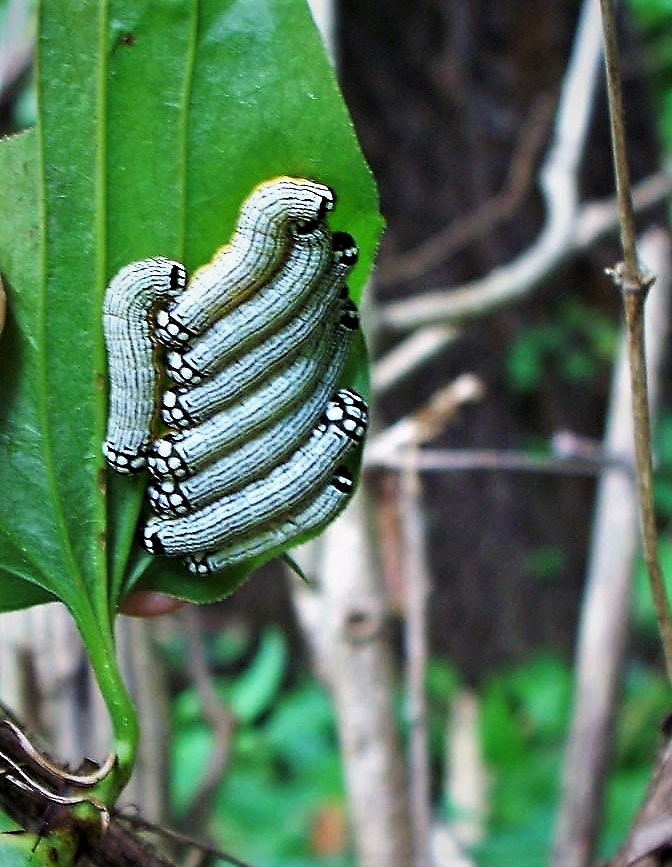
Yes, that is truly the common name of Phosphila turbulenta, a species of moth that feeds only on smilax. The caterpillars cluster together for safety in numbers, and what looks like their head is their rear (a common caterpillar ploy).

Though in their other life they are dull brown moths, the glory of a cluster of phosphila caterpillars is something we should all get to experience. Watch for them this summer –  the smilax revival is underway.


Feb.3 Life is hard for young trees

In our forest especially…

102_5951

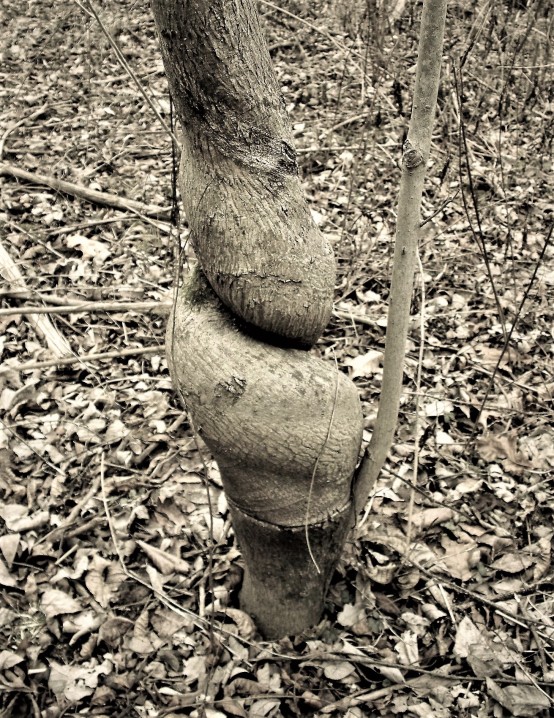
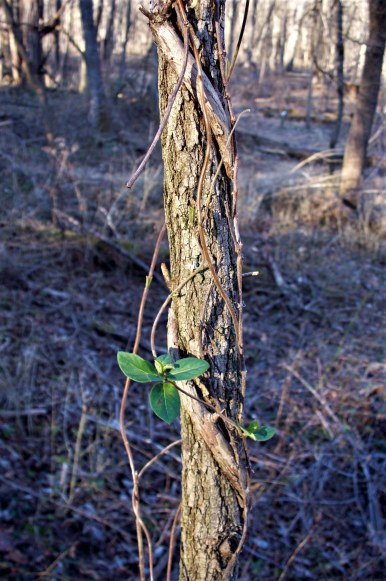
This young hickory was squeezed in its youth by a Japanese honeysuckle vine. Thankfully it survived – but  with a twist that will last all its days. I’ve never seen a mature tree that was a victim of this vine. Does this mean the vine hasn’t been in our forest that long, or that trees subjected to this treatment don’t live a long time?

102_5847

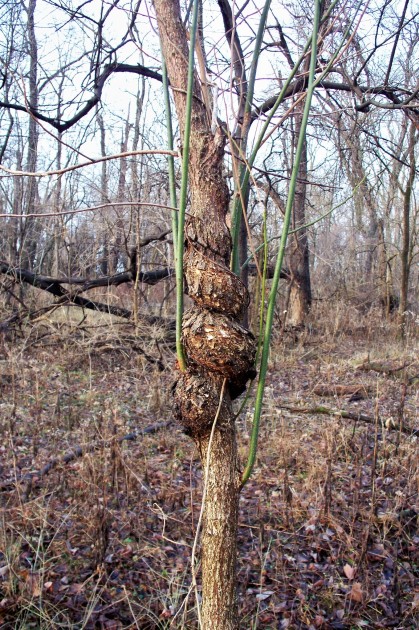
Another squeezed tree, a sassafras. In this case the strangulation inspired side shoots to emerge, perhaps anticipating the death of the upper part of the trunk. I removed the vine from this one several years ago, in an ongoing effort to rescue as many small trees as possible from a viney grasp.


102_6005

Japanese Honeysuckle is a twiner, and once it finds a tree to climb its entire stem behaves like a spiraling tendril. It’s racing for the light up high, to flower and make fruit. Note the green leaves in February – with this mild winter it gets a longer growth period.


Black cherry revival – before and after. The vines were removed and drooping side branches trimmed, resulting in a relatively undamaged tree, just with a bit of a lean.


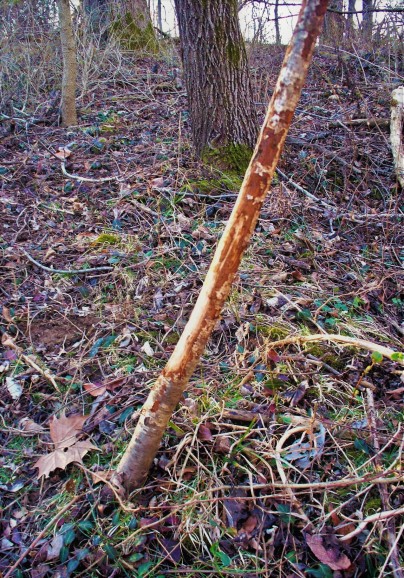
Another way to not grow old – a young black cherry and hackberry, both buck rubbed. Bucks do quite a bit more than rub their velvet off on trees. Under a heavy dose of testosterone they spar with, shove, and batter saplings and trees up to 4 or 5 inches wide. They trade scents, leaving their own, and taking with them the aroma of cedar, spicebush, black cherry or sassafras (favorites for rubbing).


102_6010

Black cherries in particular are all the rage for rubbing during this season’s rut,  I’ve seen at least 15 of this size. When more than half the cambium is removed the tree is done for. Even if it’s less than that, the future tree is quite compromised and may succumb to rot. Easy prediction – between browsing and rubbing, no more black cherry making it past youth in this forest.


102_5710

Rubbed oaks are seldom seen in our forest, likely because young oaks are so very few. Was enjoying the colors on this young red oak, when I noticed the bare white wood at the base of the trunk. It was already done for.

The last category of unfortunate trees has no images to go with it. These heavily deer browsed trees under 4 feet tall are so tiny and spindly I did not succeed in getting a good picture of one. Though they are small, it’s likely they may be much older than they look. We’ll just have to imagine them thriving in some faraway forest where the hazards are fewer.


Smilax Jan. 29


102_5872
Bristly greenbriar  Smilax tamnoides


reacts, attacks, grasps, clasps…

I love you Smilax – your name slides off the tongue, your needle thorns pierce flesh, your lovely veined leaves turn yellow in fall, your rounded clusters of dark blue berries hang always out of reach.

102_5800
last leaves of December


The only thing I don’t love is wading through thickets of your tangled vines when I’ve been foolish enough to wander off trails.

102_5861
Roundleaf greenbriar   Smilax rotundifolia


But such thickets are becoming fewer in our forest and new ones will have a harder time getting started. The wicked thorns are a clue – anything needing such armor must be delicious, and smilax is. To deer of course. The tender young shoots resemble asparagus (they’re both in the lily family) and are easy to nip off when not hiding behind the thorns.


100_4300
tasty young smilax

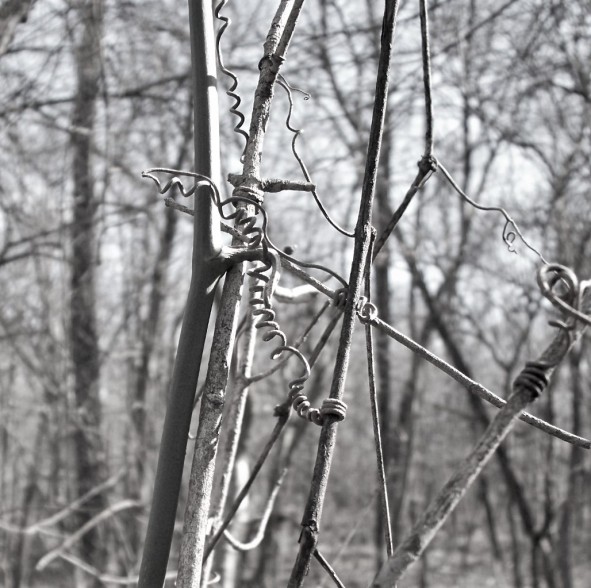
Their only hope is to get up into a tree as quickly as possible. And smilax has a remarkable way of doing this – with tendrils, in a behavior called “circumnutation”. As Charles Darwin and his son Francis first described, the tendrils of climbing plants make exploratory movements in the air. Think of swinging a rope over your head in circles till it hits a branch and grabs on.

Once a support is touched, the cellular growth in the tendril tip changes. The part that’s in contact stops growing, but on the other side it speeds up – creating a spiral growth pattern. Plant hormones, in part, direct the formation of tendrils.


102_5953
evidence of wandering – smilax tendrils

Although to write this post I waded through a bewildering amount of research on the topic of tendrils, their movements are still considered somewhat mysterious.

For me it just adds to the charm.

     -Smilax the vine has fingers that twine

102_5955


Is it Nature Yet? jan.25

102_5786

Just beyond the brush, something shone in the sun. A puffball mushroom? Like a bleached skull in the dead leaves it was white and smoothly rounded. But this was the wrong season for puffballs. A giant egg? A raccoon thought so, dragged it out of the Woodcreek Condos dumpster and gave it some serious chewing. Disappointment – hollow inside as most plastic balls are.

That’s my version of the story anyway. So how do you classify something like this?  Trash, alternative nature, on-it’s-way-to becoming something else, raccoons empty egg?

How about this one?

102_5941

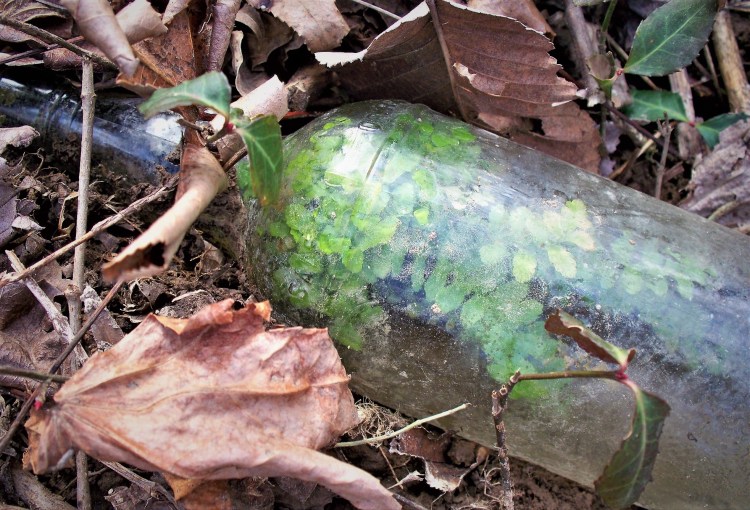
Long ago discarded booze bottle finds new life as excellent habitat for a tiny spleenwort fern.


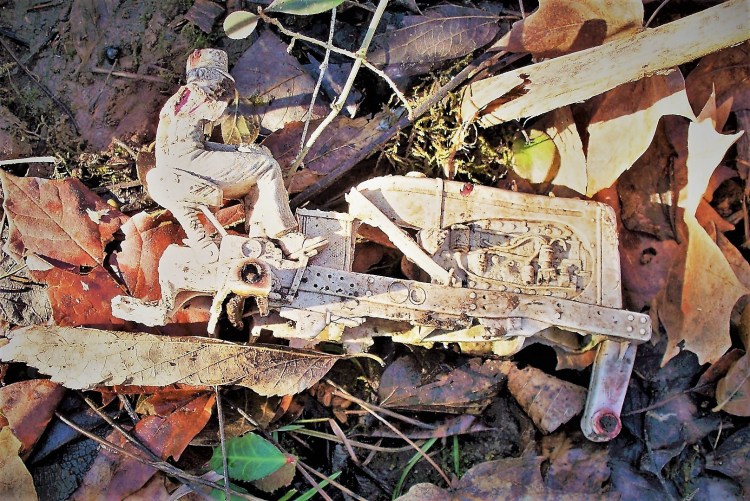
And finally, the lost toy.

102_5788

This little man on the tractor, minus an arm and part of his face, is becoming one with the earth he used to farm.

Finding these remains is one of the perks of working in a forest in the city. Here and there lie pieces of the human experience embedded in natural processes.

Is it nature yet?

Jan.22 Counting Pellets


100_4866
deer from the rear – have been waiting for a chance to use this image

As you might guess, “deer pellet” is just one of those nicer ways of saying poop. And the white-tailed deer produces a prodigious number of them- 13 pellet groups per day on average, scientists have estimated. Each group contains up to 90 round or oval pellets. The lifted tail in the image above signals a pellet group on the way.

Pellets can be classified as firm, soft, or loose depending on what the deer was eating. The firm type is most commonly observed. The other two might lead the uninitiated observer to think there were miniature horses or cattle about.

102_5884

102_5883

 Besides fertilizing the landscape, pellets are useful for estimating the deer population of a forest. Wildlife biologists and ecologists generally do the counting, though anyone with lots of land and deer on it might find this a useful method.

Pellet count plots are laid out along a transect line, at 100 foot intervals. Each plot has a four foot radius, and the rules require that each pellet group counted must consist of at least 10 pellets, and at least half of them must lie within the plot. After slogging through the woods collecting this sort of data all day, you might wonder if it wouldn’t be easier to just count the deer!

But we’re not done yet – all the data must be plugged into a formula, as follows:

PGC / (PGD x DLO x PSM) = deer per sq. mile

PGC – pellet groups you counted

PGD – pellet groups, per deer, per day (13)

DLO – days since leaves off

PSM – plot area in square miles

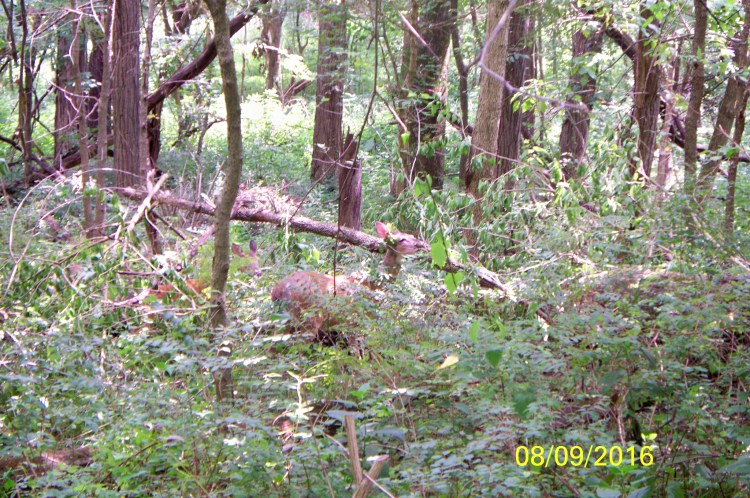
Just for the fun of it I decided to find a pellet count plot at Beargrass Creek and try some counting. The site I visited had a dense carpet of wintercreeper and looked great. But the frustrations of data collecting quickly became evident – although the vines were well browsed and pellet groups lay scattered about, none fell within the radius of the plot. However, a group of deer nearby was watching me, so I counted them. Obviously many plots would need to be surveyed to get a good overall picture of population.
 

102_5794
a family relaxing in good cover


Lest you get the idea I am making fun of pellet counting, that is not the case. This method of estimating deer population is one of the tools wildlife managers use to determine if there is a healthy balance of large herbivores to the land they are living on. Annual pellet counts are a particularly good way to assess whether deer numbers are going up or down.
100_4855

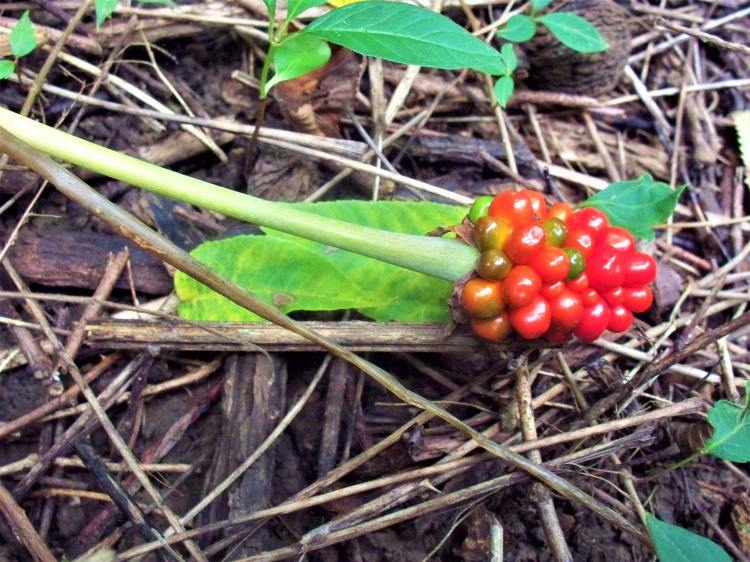
Why does this matter? Carrying capacity can vary quite a bit based on the quality of the habitat, but habitat inevitably declines as deer numbers grow. Just like us, they eat the stuff they like best first, leaving the less preferred and downright unpalatable plants for last. In our forest there are still plenty of mayapples and jack-in-the-pulpit,  because both are on the “eat only when starving” list. Solomons’s seal, on the other hand rarely succeeds in producing a flowering stalk that doesn’t get bitten off.

100_4388

While a pellet count attempts to estimate deer numbers, another type of study, the “browse impact survey” quantifies the impact deer have on  forest regeneration. This one will be featured in a future post.

102_5430
enjoying some good browse


Jan. 18 Two photos

102_5737


102_5744

Back in the day I used to play around with darkroom photography.  This is a bit inaccurate – there is nothing playful about mixing caustic chemicals, breathing the fumes, standing in the dark for hours and endlessly reprinting an image to get it just right.

So great to have the edit photo option now, don’t miss that darkroom a bit. These two images from the forest seemed to have that something, that possibility not yet realized. Half an hour playing around with the edit yields an interesting result. And this time it really is play.


Jan. 16 Thank-you SOUL Volunteers!

We now have a new revival site


102_5854
These brave young people didn’t even know they’d be working outside


102_5853
old-growth bush honeysuckle


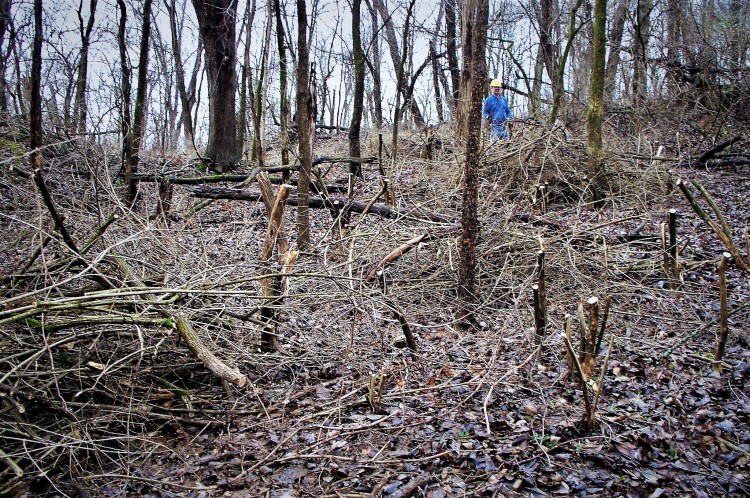
Nineteen U of L students, armed with loppers and saws, headed into the woods today to cut things down. We are so grateful – without large groups volunteering on a regular basis, our forest revival efforts would not succeed. So many places in this forest still look like the pics above, of the site where we worked today. Literally nothing can grow under these spreading, dense shade producing shrubs. So step one is to cut them down, treat stumps with herbicide, or come back and cut them again when they grow new leaves.


102_5856
Conrad Selle in a sea of cut honeysuckle


Back in the day, when I first was learning about invasive plants, we would feel really good after a long workday, with the skeletons of many bush honeysuckles prone on the ground around us. We had done what needed to be done, and good things would surely result.

Now I’m not so sure. We were dreadfully naïve to assume the forest would heal itself because we left a great big gap in the understory. Returning to a worksite in just a couple of years showed a healthy regrowth of invasive plants and nothing else. It’s just not that easy.


102_5746
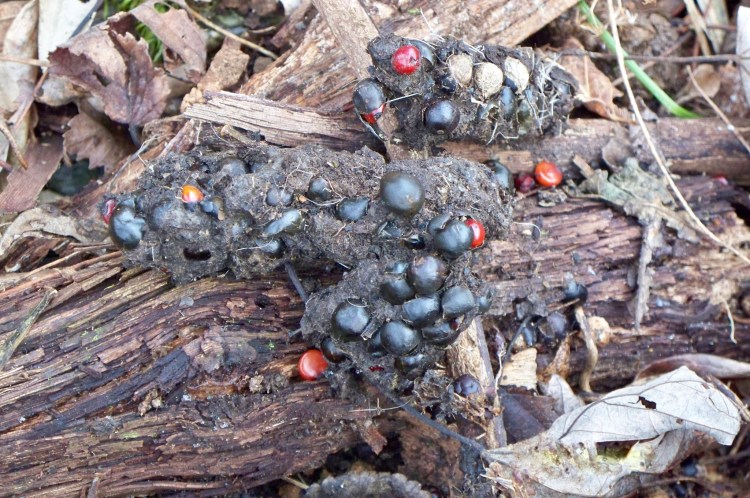
raccoon scat with native and invasive seeds


Why?  Because you can’t get native plants when all the seeds are from honeysuckle, privet and wintercreeper. The seed bank rules, and what’s in it is what comes up next.

102_5859

Looking at the pics of today’s worksite, there are no young trees or native shrubs.  The bright green leaves on the ground belong to the invasive vine wintercreeper. Now that there’s plenty of light, it could go into overdrive and carpet the whole area in a couple years. Then it would climb up the trees to flower and make more seed. Fortunately the deer won’t let it go that far. They were watching while we worked today, eager to get to the nice green stuff we’d uncovered.


100_4865
yearling browsing wintercreeper


So now we’ve started the process of reviving this site – what’s next? It will be featured in future posts under the name “the woodcreek mounds” due to it’s oddly moundy topography. A great future project would be transplanting a quantity of small spicebush plants here, since it’s one of the very few browse-proof native shrubs. Over time, our best hope is the seed bank eventually will be loaded with spicebush seed, instead of what’s there now.